A stone hits the windscreen on the freeway, you hear the crack, and then you spend the rest of the drive looking at it. The question we get most is whether it can be repaired or whether the whole windscreen has to go.
The honest answer depends on three things: how big the damage is, where it sits and whether it has started to crack. Here's how we look at each one.
The 20-cent coin rule of thumb
As a rule of thumb, a chip smaller than a 20-cent coin can usually be repaired. Hold a coin over the damage. If the chip, including any short cracks around it, fits under the coin, there's a good chance it's a repair job.
Bigger than the coin, or with a crack running out of it, and the odds move toward replacement. That's a guide, not a promise. We still look at the depth, whether it has gone through both layers of glass and how dirty the chip is.
If you'd like a quick steer before you call, the repair or replace checker on our home page walks through the same questions in about thirty seconds.
Where the damage is matters as much as the size
Two spots change the answer:
- The driver's line of sight. Even a neat resin repair can leave a faint mark or a slight distortion. We don't like leaving that in the area directly in front of the driver, because it's exactly where your eyes are working. Damage there often means replacement even when it's small.
- The edge of the glass. A chip within about 5 cm of the edge is sitting in the part of the windscreen under the most stress, where the glass meets the frame. Edge chips tend to spread, and a repair there is less likely to hold.
Rules about windscreen damage and roadworthiness are set by the state road authority, and they can change, so we won't quote exact limits here. If you're worried about a defect notice or a roadworthy inspection, check with the authority or ask us what we see on your glass.
Why chips spread
A chip is a tiny wound in the outer layer of the windscreen. Glass is under stress all the time, and anything that adds to it can push the damage along.
- Temperature swings. A cold morning followed by a hot demister, or a car parked in full sun and then hit with the air conditioning, makes the glass expand and contract unevenly.
- Vibration. Every pothole, door slam and stretch of rough road flexes the windscreen a little.
- Moisture and dirt. Water and grit get into the chip, and that makes a clean repair harder.
That's why the chip repair job is worth doing early. A chip that could have been fixed in a short visit can turn into a crack across the glass after one cold night.
What resin repair does, and what it doesn't
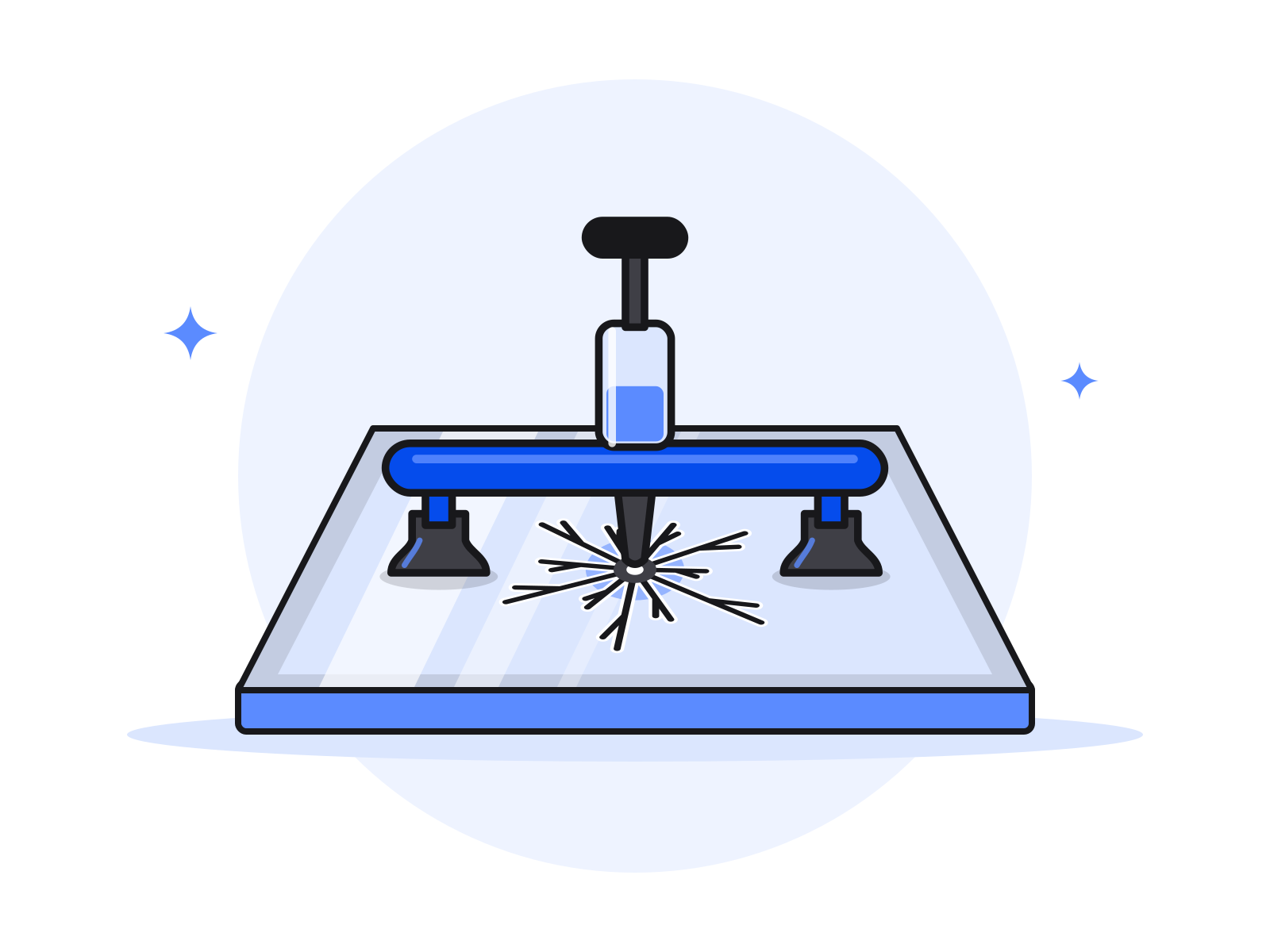
The repair clears the loose glass out of the chip, draws resin into it under vacuum and pressure cycles so the air comes out and the break fills, and sets the resin with UV light. It's normally a short job on the day.
What it does:
- Stops the chip spreading.
- Restores much of the glass's strength around the damage.
- Makes the chip far less visible.
What it doesn't do:
- Make the chip vanish. A faint mark usually remains.
- Fix a crack that has already run out of the chip. Cracks generally mean replacement.
- Work well on damage that has been left for months and filled with dirt.
What to do until you can get it looked at
- Put a piece of clear tape over the chip. Packing tape is fine. It keeps dirt and water out, which helps the repair.
- Avoid blasting the demister or hot air at the windscreen on a cold morning. Warm the cabin gradually and let the glass come up to temperature.
- Avoid slamming doors and driving over rough roads while the damage is there.
- Don't put glue, nail polish or anything else on the chip. It can contaminate it and make a proper repair harder.
- Take a photo. A clear picture helps when you describe the damage over the phone.
Park in the shade where you can, and don't leave a crack to sit through a hot day.
When it's a crack
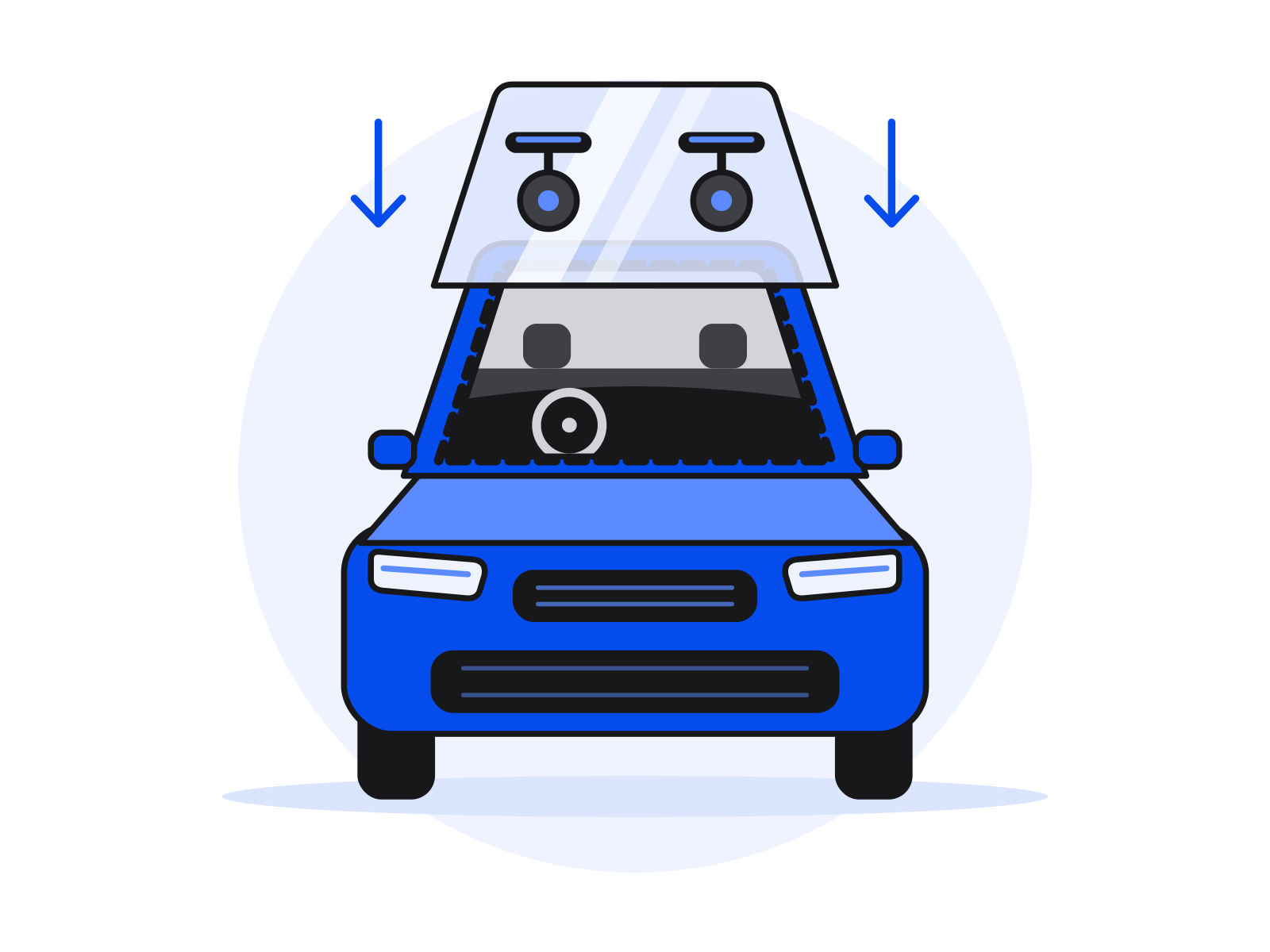
Long cracks are replacement jobs. If you're booking one, mention whether the car has a camera, because we'll arrange the calibration with it. The windscreen replacement page explains the steps.
Not sure which you've got? Send us the vehicle and a photo of the damage and we'll tell you whether it's a repair or a replacement.