Short answer: if your car has a forward-facing camera mounted on the windscreen, yes, a new windscreen normally means the camera has to be calibrated again. Most manufacturers specify it, and it's the part of the job people don't expect to hear about when they book a glass replacement.
Here's what's going on, in the order we explain it to customers at the counter.
What the camera does
The small camera housing behind your rear-view mirror watches the road ahead. Depending on the car, it feeds lane-keep assist, lane departure warning, automatic emergency braking, adaptive cruise control and traffic sign recognition. These are grouped under the name ADAS, short for advanced driver assistance systems.
The camera doesn't understand the road on its own. The car's software has been told exactly where the camera sits and which way it points, and it works out everything else from that.
Why new glass changes the camera's aim
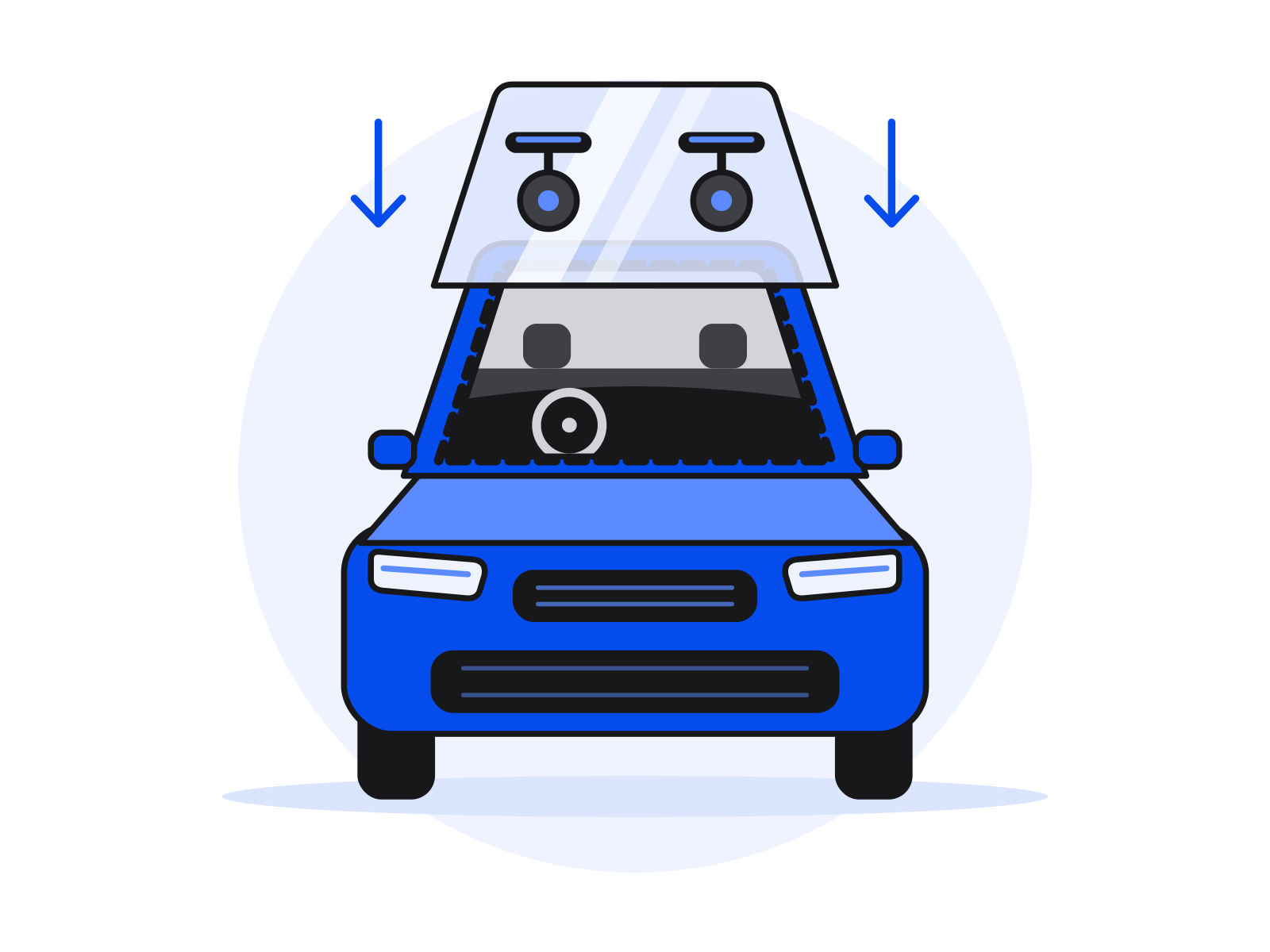
The camera is attached to a bracket bonded to the windscreen. When we fit a new windscreen, that bracket is bonded in a position that's close to the original but never identical. Manufacturing tolerances in the glass and the bracket, plus the position the glass sits in the frame, add up to a small difference in where the camera points.
Small angles matter at distance. A camera that's out by a single degree sees the road about 1.7 metres off to one side at 100 metres. That's enough to put a lane line in the wrong place.
The glass itself matters too. The camera looks through the windscreen, so the thickness, curvature and optical quality of the glass bend the view slightly. A different piece of glass bends it slightly differently.
Static and dynamic calibration
There are two ways to teach the camera where it is now:
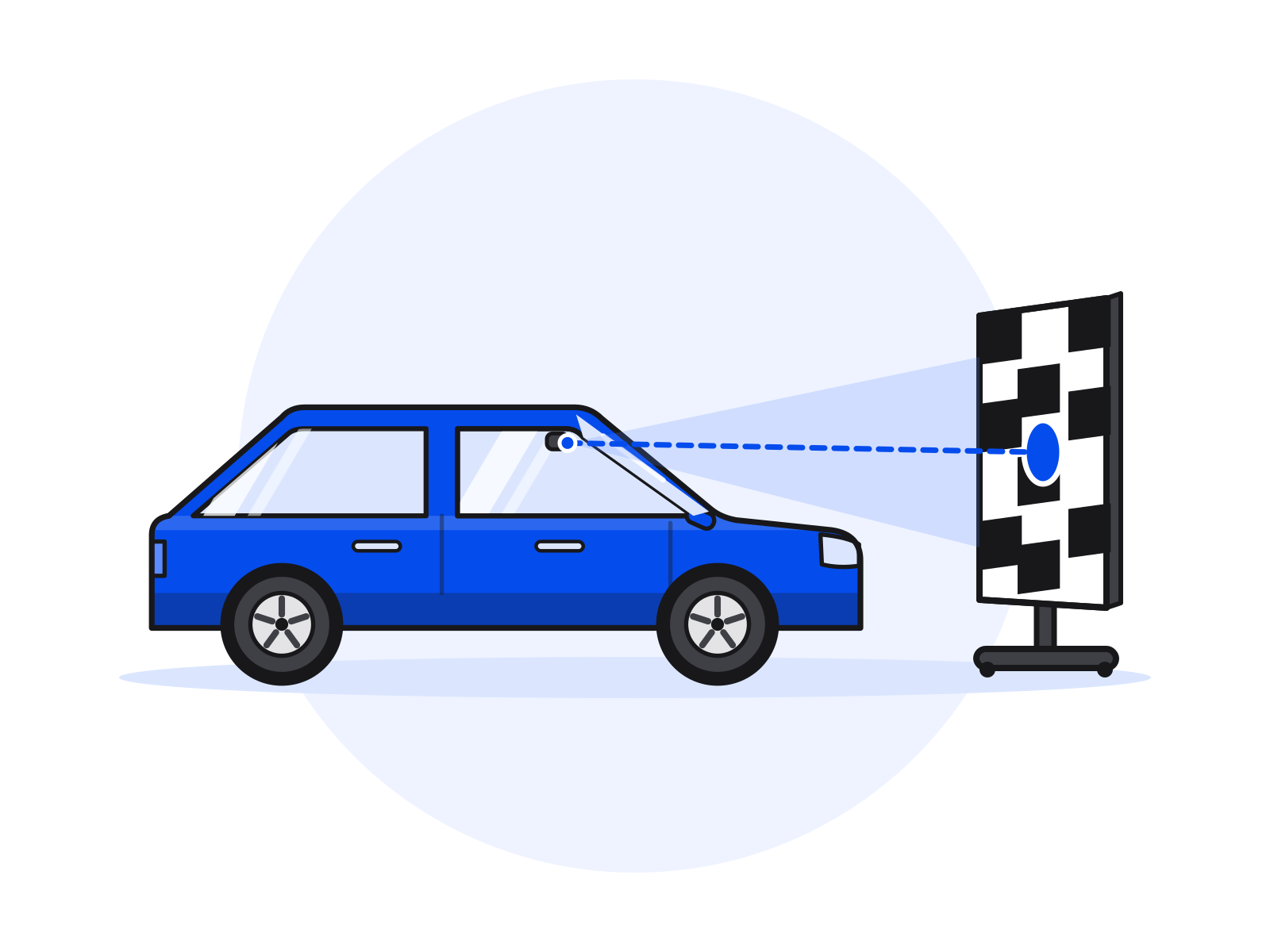
- Static calibration: the car sits on a level floor with printed target boards set at measured distances in front of it. The scan tool tells the camera to look at the targets and recalculate its aim.
- Dynamic calibration: the car is driven at a set speed on well-marked roads while the scan tool lets the camera learn from the lane lines it sees.
Some vehicles need one, some need the other, and some need both. The manufacturer's procedure decides, not the workshop's preference, so we check the requirement for your model before the job.
What happens if you skip it
The car will still drive. That's the trap. A camera that hasn't been recalibrated can read the road a little wrong, and the symptoms are the ones you'd least want:
- Lane-keep assist that nudges you toward one side of the lane, or doesn't react to a lane line it should have seen.
- Emergency braking that comes in late, or that triggers when it shouldn't.
- Adaptive cruise control that judges the gap to the car ahead incorrectly.
- A warning light or a message about the camera or driver-assist systems. Some cars show one, but plenty don't, so a clear dashboard is not proof the aim is right.
It can also leave you in an awkward spot with an insurer or a fleet manager later, because there's no calibration report to show that the work was finished.
How to tell if your car has a camera
- Look at the top of the windscreen behind the rear-view mirror. A plastic housing with a lens facing forward is the usual sign.
- Check the owner's manual or the dashboard menu for lane-keep assist, lane departure warning, autonomous or automatic emergency braking, or adaptive cruise control.
- Remember that a rain sensor is not the camera. Many cars have a rain sensor and nothing else up there.
- If you're still not sure, send us the make, model and year (or the rego) through the contact form and we'll tell you what it has.
Radar units in the grille or bumper are a separate system and don't depend on the windscreen. If your car has the camera, though, assume the glass and the calibration go together until a technician says otherwise.
Doing both in one visit
National Autoglass and National ADAS Calibrations work from the same Reservoir site, so we can book the two jobs together. The glass goes in first, then it has to cure before the targets can be set up, and then the calibration is done before you collect the car. One booking, no second workshop, and one calibration report that refers to the glass replacement it followed. That report is what insurers and fleet managers tend to ask for.
You can read how the combined job works on the glass and calibration bundle page, or see the windscreen replacement steps. Our FAQ answers the common questions about timing.
The simplest way to find out what your car needs: tell us the vehicle and we'll confirm whether it needs calibration, and which type, before you book.